How to Build a $3,400-a-Month Laser Engraving Business from Your Garage.
Without Etsy, Paid Ads, or Social Media.
- 30-day guarantee: if the pricing formula doesn't change how you price your next listing, I'll refund it. No questions.

My name is Gary Treadwell.
I live in Westerville, Ohio, twenty minutes from Columbus. I spent 26 years running a five-truck HVAC company before I sold it in the spring of 2021, for a number I describe only as not life-changing, but enough to breathe.
I had no craft background. In May 2022, a banquet vendor failed to deliver forty personalized trophy cups two days before a youth baseball banquet my daughter was coaching. I bought a laser that afternoon, set it up in the garage at midnight, watched three tutorial videos, and had thirty-seven cups finished by six a.m. Three got scrapped during focus calibration. That’s an honest number for a first run.
Twelve parents asked for orders before the banquet was over. I had a waiting list by Friday.
That night solved one problem. It didn’t build a business. Figuring out the business took two and a half years I didn’t need to spend.
This book is everything I worked out between that banquet and where the business sits now.
What You Get
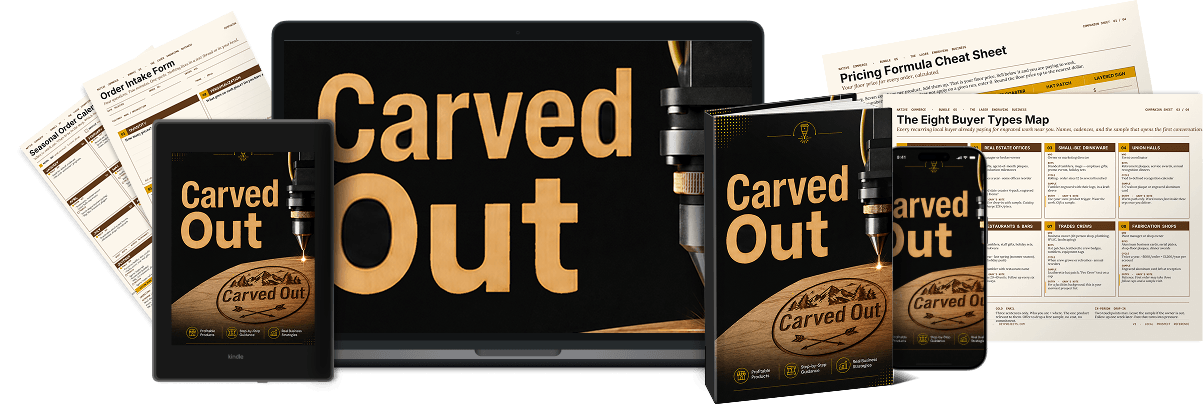
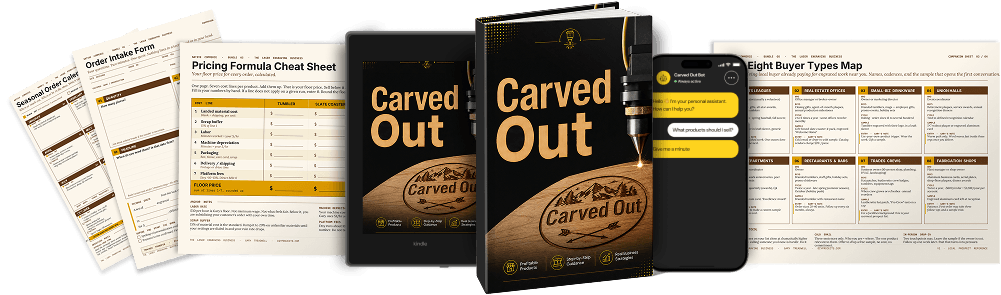
Here’s exactly what comes with The Laser Engraving Business for $27:
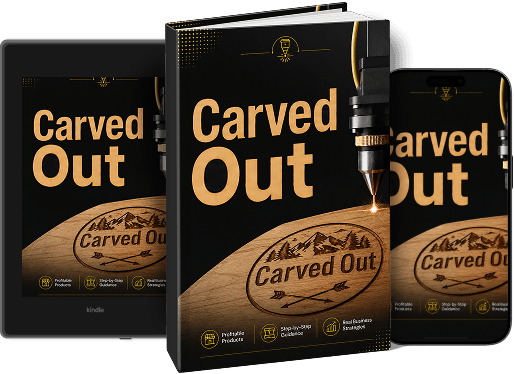
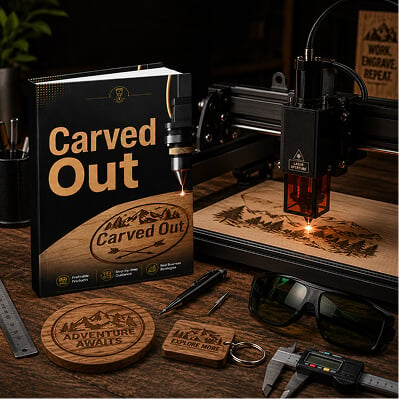
The eBook: The Laser Engraving Business
100 pages covering the complete system from market reality through your first paid invoice. Buyer types, business basics, machine and materials, pricing, first customers, and reorder systems. Every chapter ends with one specific action to take before opening the next one.
Your Personal Laser Engraving Business Advisor
Trained on the eight-line pricing model in this book. Paste a buyer’s RFQ, get a priced quote in your voice.

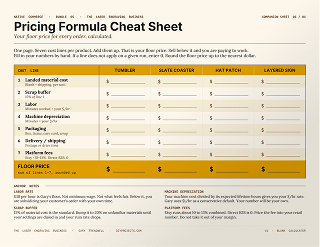
The Pricing Formula Cheat Sheet
A one-page calculator pre-filled with the eight-line model for four core products: tumblers, slate coasters, hat patches, and layered signs. Material, scrap, labor, machine depreciation, packaging, delivery, platform fees. Your floor price for every order, calculated.
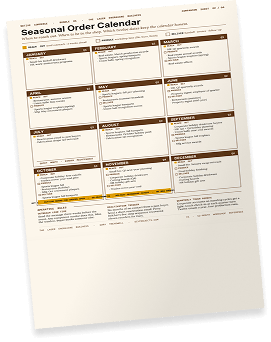
The Seasonal Order Calendar
Which reorder windows to track for each buyer type. Q4 cutting board pre-orders, holiday corporate drinkware cutoffs, and the quarterly and pre-event cycles real estate, HR, and restaurant accounts run on.
- 30-day guarantee: if the pricing formula doesn't change how you price your next listing, I'll refund it. No questions.
The Machine Was Never the Problem
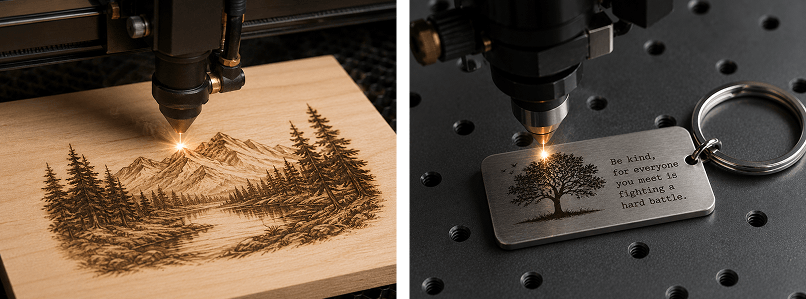
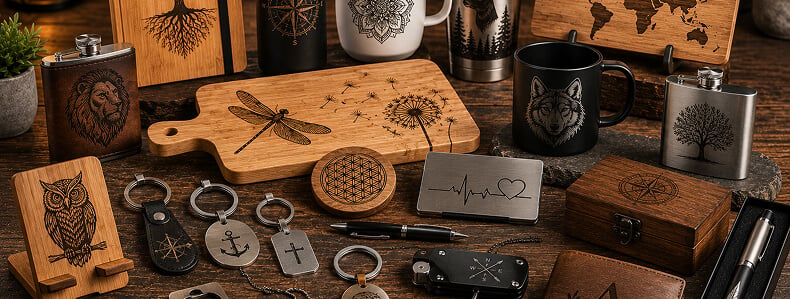
You’ve already made the whiskey glasses for your brother-in-law. The retirement dog tag. The cutting board with a family name on it. People keep telling you the same thing.
What’s missing isn’t skill. It’s the system around the machine, not another finished piece for someone’s mantel.
The Banquet That Started It
I had watched laser videos for about six months before that Thursday night. I never pulled the trigger on a machine. My daughter called me standing in her kitchen at nine-thirty, and I drove to a Michaels, bought forty tumbler blanks, and ordered a laser on same-day delivery.
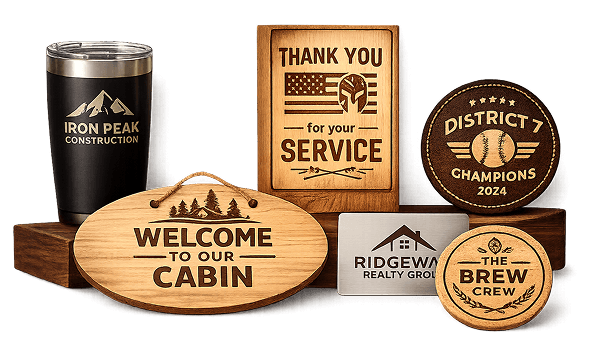
By December 2022, I was clearing $1,100 a month. League trophies. Retirement plaques for two local union halls. Branded drinkware for two restaurants near Westerville that wanted tumblers for their bar service.
None of it came from Etsy. None of it came from a camera. All of it came from being local, present, and holding something engraved.
Why the Saturated Market Argument Doesn't Hold Up
Etsy’s front page is crowded with personalized tumblers. That’s true.
Here’s what’s also true. The real estate office two miles from your house doesn’t browse Etsy for closing gifts. The HR director at the plant across town orders retirement plaques from a catalog company at a higher price and a slower turnaround than a local vendor would need.
Neither one knows you exist yet.
The book names eight buyer types who already purchase engraved work on a recurring schedule and shows you which ones fit a facilities or trades background best.
Eight Chapters, In Order
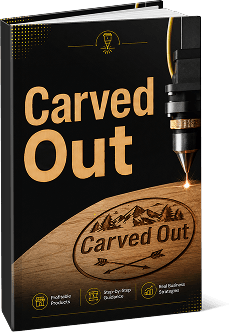
Eight chapters, in order: market reality, buyer types, business basics, machine and materials, pricing, first customers, reorder systems, first thirty days.
- The market isn’t as saturated as Etsy makes it look. Chapter 1 separates the channel problem from the demand problem, with real numbers instead of encouragement.
- Eight recurring local buyer types already need what you make. Chapter 2 names them: sports leagues, real estate offices, HR departments, union halls, restaurants, trades crews, fabrication shops, and branded-drinkware buyers.
- What to name your shop and what not to engrave. Chapter 3 covers the business basics, including intellectual property, food-contact items, and a twenty-minute Google Business Profile setup.
- An eight-line cost model that replaces guessing. Chapter 5 walks materials, scrap, labor at $30 an hour, machine depreciation, packaging, delivery, and platform fees across four real products.
- A first-five-customers method that doesn’t need a website. Chapter 6 covers sample-making, warm outreach, a cold email template, and the four-question intake that keeps orders off sticky notes.
- A reorder system that turns one order into four. Chapter 7 covers a five-step reactivation sequence, a handwritten reorder card, and why an email list of past buyers outlasts any platform.
- 30-day guarantee: if the pricing formula doesn't change how you price your next listing, I'll refund it. No questions.
What Actually Happened, In Order
I clear $3,400 a month now, working about fifteen hours a week, with four corporate accounts on quarterly reorder.
That’s the current average, not the starting point. December 2022 was $1,100 a month. Q4 runs higher, $5,200 last year, from a seasonal cutting board run and holiday drinkware.
December 2022
$1,100/month
Q4
$5,200
These are my numbers, from my own shop, over two and a half years. The book shows the sequence, not a shortcut around it.
Pricing Is Where I Lost Six Months
Six months into selling, I sat down with Diane and tried to put an honest number on what I was making. I found the problem.
I’d been pricing tumblers at $22 and counting the blank and the supplies. Nothing else. I’d left out my own labor. At $30 an hour, my real margin was $2.75 a tumbler before machine wear, before packaging, before scrap.
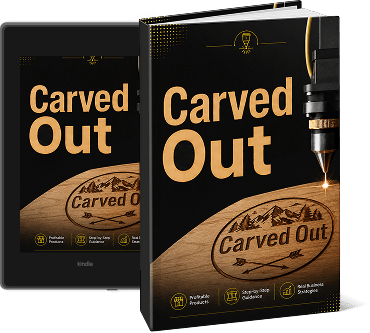
In the book, the model runs eight lines: material, consumables, a 15 percent scrap buffer, labor at $30 an hour, machine depreciation, packaging, delivery, and platform fees. Run it once on a real order and quoting a corporate job takes minutes, not days.
- 30-day guarantee: if the pricing formula doesn't change how you price your next listing, I'll refund it. No questions.
An Order That Isn't Written Down Is a Mistake Waiting to Happen
A customer asks if you do tumblers. The wrong answer is a price. The right answer is four questions: how many, what goes on them, when they’re due, and whether they need delivery or pickup.
Get personalization details in writing, not over the phone. Read the file back before you run it. I’ve scrapped two coaster sets and one tumbler order from a name I heard wrong on a call.
Every order gets logged before production starts: customer name, product and quantity, personalization, deadline, paid or not. A notebook works. A spreadsheet works. The format doesn’t matter. What matters is that nothing lives in a text thread you’ll lose track of by Thursday.
The System That Keeps Them Coming Back
At a small business seminar in Indianapolis in March 2023, I sat through an afternoon session on customer reactivation that changed how I ran the business. I’m naming the source because the sequence isn’t mine. It came from Perry Belcher.
I had 31 past customers sitting in a spiral notebook. I had never sent one of them a follow-up message. I wrote a single email to the full list that week. Four orders came in within two days. One became a corporate account that still reorders every quarter.
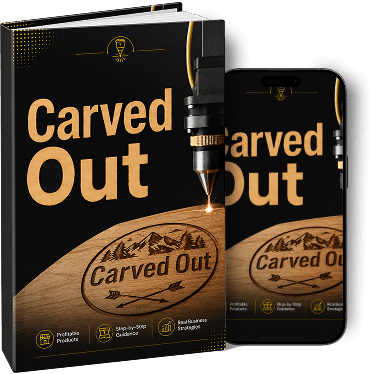
That five-step sequence, plus the handwritten card I now send my top accounts before their reorder window, is in Chapter 7.
- 30-day guarantee: if the pricing formula doesn't change how you price your next listing, I'll refund it. No questions.
Four Accounts, None From a Marketplace

My four corporate accounts came from four different starting points, and none of them involved a marketplace listing.
The real estate office came from a slate coaster sample and a relationship I already had from my HVAC years. The union hall came from a plaque I made for a friend’s retirement dinner, at a table where the right person happened to be sitting. The property management company saw those same coasters on a reception desk and called three days later. One engraved aluminum card, left on a different desk, brought in a manufacturing account the next morning.
Four accounts. Four different paths. All of them local, and all of them started with something engraved already in someone’s hands.
The book names all eight buyer types and shows you how to map your own network against them before you make a single cold call.
- 30-day guarantee: if the pricing formula doesn't change how you price your next listing, I'll refund it. No questions.
The Room You Get Access To
The hardest part of running a garage engraving business isn’t the engraving.
It’s wondering if you’re the only one trying to do this.
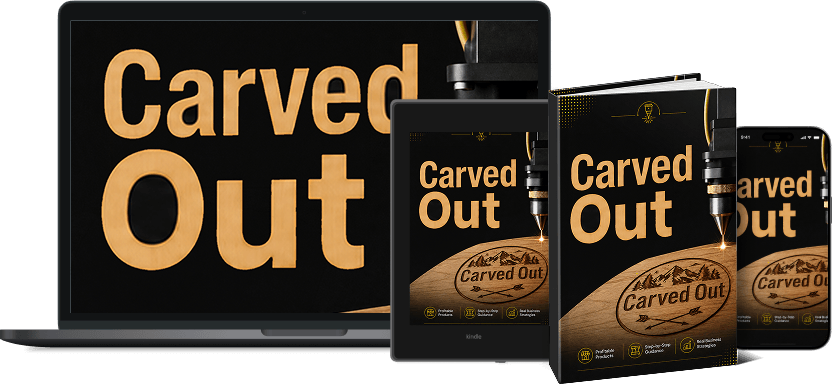
Inside the bundle, you get access to a room of other engravers running businesses out of garages in towns like yours. You’ll see their quotes, their finished work, and what actually landed a corporate account versus what didn’t.
- 30-day guarantee: if the pricing formula doesn't change how you price your next listing, I'll refund it. No questions.
Why $27
$27 is less than an hour of the labor rate this book teaches you to charge. That’s deliberate. The book is built to pay for itself on your first properly priced order, not your fiftieth.
- 30-day guarantee: if the pricing formula doesn't change how you price your next listing, I'll refund it. No questions.
What You'll Walk Away Knowing
- Why the saturated-market argument doesn't hold up for local and B2B buyers
- The eight local buyer types already paying for engraved work near you
- How to run the eight-line cost model before you quote a job
- What to say when a customer pushes back on price
- How to turn a compliment into a sample drop-off, not an awkward ask
- How to keep custom orders organized before mistakes happen
- Why a list of past buyers is worth more than a following
- How to approach local businesses without sounding like a salesman
- What not to engrave: intellectual property, food-contact items, and regulated materials
- The thirty-day calendar from Day 1 to your first paid invoice
- 30-day guarantee: if the pricing formula doesn't change how you price your next listing, I'll refund it. No questions.
You Already Have the Hard Part
You can run the machine. That was never the question.
The question is whether you have five names written down and a quote ready when one of them calls. Right now, you don’t. This book is how you get there.
If you’re still on the fence by Chapter 3, I haven’t done my job. If you’ve made your first sale before you finish Chapter 8, I have.
- 30-day guarantee: if the pricing formula doesn't change how you price your next listing, I'll refund it. No questions.
1. Your Info
Your Order Info
2. Payment
Your Payment Details
You’ll get an order confirmation and download link by email.
What’s Included:
- The Laser Engraving Business Book
- The Pricing Formula Cheat Sheet
- The Seasonal Order Calendar
- The Eight Buyer Types Map
- Your Personal Laser Engraving Business Advisor